
|

|

|

|

|

|

|

|
|
In a hurry? Learn in small bites! Sign up for my free, 7-day e-mail mini-course, and I'll dish up the basics in just one week!
|

|
|



|
|
|
 |
 |
|
|
Who's
on Your R&D Team? You might have conjured up an
image of corporate scientists huddled In stark contrast, today’s R&D teams can sprout anywhere and be run by anyone, at any time, for any purpose — including yours or mine! Our virtual world offers a plethora of opportunities to initiate or participate on an R&D team. Anyone who has worked on projects alone or with others has probably wished for the opportunity to vet new ideas through a supportive group of people who can provide constructive, candid comments. This article offers an overview of what R&D teams do, how they work, what to expect if and when you choose to start or participate on a team, and what’s in it for you as a contributor. What Do R&D Teams Do? My research revealed that R&D
teams act as a think tank, providing feedback and strategic
input for designing, developing, testing, and refining something.
The teams run by entrepreneurs and professional associations often
operate entirely in a virtual mode. Participants might be
asked to do things such as:
How Do R&D Teams Work? A person or business that decides to kick off an R&D team (the R&D team leader) may issue a general invitation, such as through a mailing list or a Web site. The team might support the launching of a new product, for example, or help evaluate ideas on an ongoing basis. Participation is voluntary,
which means that compensation to contributors entails primarily
intrinsic rewards rather than monetary ones. One major reward would
be working to produce a visible result in an area of burning interest.
Team leaders also can offer certain tangible or non-tangible benefits
to team members (more below). Virtual R&D teams usually “meet” to discuss ideas via electronic means — e-mail, telephone conferencing, or Web conferencing. Participants might receive e-mail requests up to several times per month, depending on the project’s needs. Not every project will necessarily interest every team member; participants generally pick and choose. Communication among the team members might be direct and simultaneous, such as via teleconferences, or indirect, such as in a written summary form. In the latter case, participants might receive a periodic digest of ideas and feedback that had been submitted by e-mail. Team members should expect to follow certain ethical standards regarding the confidentiality of information and proprietary material. R&D team members might even be asked to sign a nondisclosure agreement. Participants typically agree to allow the person or business that commissioned the team to use, adapt, modify, and incorporate their contributions into the materials without anticipating any recognition or compensation. That person or business will usually hold the claim to any copyrights, trademarks, patents, and commercial benefits that relate to or result from the intellectual property under development. How Do R&D Team Members Benefit? So, what’s in it for you, if you’re participating on an R&D team rather than running one? With respect to topics of great interest to you — whether those are wiping out world hunger, improving the lives of abandoned pets, launching a new professional society, or increasing customer retention — working behind the scenes to make a difference can produce its own profoundly satisfying payoff.
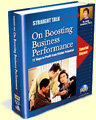
It’s likely that you’ll have access to beneficial programs, products, or other materials that you’ll be asked to review and critique. You may be exposed to a rich medley of concepts and original thinkers who will stimulate your own creative juices, leading you to spawn your own unique products, services, organizations, and R&D teams. Further, you might participate in compelling collaboration opportunities, receive product or service discounts, or take advantage of other tangible benefits. Last but not least, you could experience a sense of camaraderie, oneness, and higher purpose unlike anything you've ever felt or experienced before. The best part about the R&D team opportunity is that you can make new associations and alliances that last a lifetime. ~~~~~~~~~~~ Adele Sommers, Ph.D. is author of “Straight Talk
on Boosting Business Performance: 12 Ways to Profit from Hidden
Potential.” To learn more about her book and sign up for more
free tips like these, visit her site at www.LearnShareProsper.com This article may be distributed freely on your Web
site, as long as this entire article, including the links and full
“About the Author” section, are unchanged. Please send
a copy of, or link to, your “reprint” to Adele@LearnShareProsper.com. Copyright 2005 Adele Sommers, The Enterprise Prosperity
Guild, All Rights Reserved.
779 words |
||
 |
 |
 in
a laboratory late at night, tinkering with proprietary product ideas
behind locked doors.
in
a laboratory late at night, tinkering with proprietary product ideas
behind locked doors.
 property.
 You
might be invited to contribute to an ongoing virtual discussion
forum, filled with divergent viewpoints from around the country
or around the globe. Sessions might be highly philosophical and
populated with Big Ideas.
You
might be invited to contribute to an ongoing virtual discussion
forum, filled with divergent viewpoints from around the country
or around the globe. Sessions might be highly philosophical and
populated with Big Ideas.
|
|

|
|

|
Receive “just in time” tips for tuning up your business performance, sent to your in-box every 2 weeks! Yes! Send FREE Boosting Business Performance advice!
|
 |
 |
|
Explore the award-winning “Straight
Talk” series by Adele Sommers, Ph.D.
|


Home | Start
Now! | Free Articles | Audio Classes
| Products & Tools | Recommendations
| Mentoring Program | About
Us | Site Index | Privacy
Policy | Terms & Conditions of Use
| Newsletter Sign-up | Newsletter Index | Free 7-Day Minicourse | Free Report |