Using Video-Sharing Sites
to Boost Your Marketing Campaigns
by Adele Sommers
Pioneering video-sharing sites such as YouTube have blasted open a powerful commercial, social, educational, and recreational broadcasting conduit that didn't exist more than a few years ago. For those hoping to exploit the capabilities of Web 2.0, such sites offer unparalleled, no-cost promotional options. This article explains the YouTube phenomenon and offers three case studies to spark your imagination.
What Is YouTube?
YouTube is a *free* online video-sharing Web site where visitors can upload, watch, and share video clips. The site provides several ways to show the popularity and quality of the posted movies, such as a video rating system, the ability to leave comments, and a running count of how many times each video has been viewed.
Videos used to be long and slow-loading, and required separate software to view them. YouTube revolutionized online video by developing a technology that easily allows people to watch videos in a Web browser, as well as embed YouTube videos in remote Web sites.
This embedding feature can be a huge advantage in promotion, as you can easily place numerous videos on your Web sites, blogs, social networking pages, and just about any other page where you can add HTML code.
Some YouTube background: Chad Hurley, Steve Chen, and Jawed Karim founded YouTube, Inc. on February 15, 2005 (just two short years ago). The founders were former employees of PayPal, another major success. More facts:
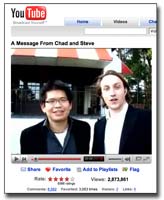 YouTube went from zero to over 4 million monthly visitors within three months, and is still growing by leaps and bounds. YouTube went from zero to over 4 million monthly visitors within three months, and is still growing by leaps and bounds.
- Google acquired YouTube in October 2006 for $1.65 billion (only 20 months after the company was started), thus combining the greatest force in search and Internet advertising with the front runner in online video. To learn more, watch this message from Chad Hurley and Steve Chen. It’s interesting to note the very relaxed and informal flavor of this video, which communicates much about the YouTube vision.
What can you upload to YouTube, or its cousin site, Google Video? Just about anything and everything! On the strategic side, you can post short clips or full-length videos on your business message, advice on specific topics, "how-to" techniques, product descriptions, and more. If they are popular, the videos will soon generate invaluable word-of-mouth buzz that will perpetually propel your "viral marketing" campaign.
The following case studies provide a few short, low-budget examples of the many ways people are using video-sharing sites for their business messages, usually to drive traffic to their own domains.
Case Study #1: Will It Blend?
Can you promote blenders with wild success on YouTube? It's certainly being done, but not in the typical commercial fashion. By creating a series of nutty "Will It Blend" videos, Blendtec Home Blenders has garnered a fervent following by churning all sorts of nonfood products to demonstrate its product's prowess.
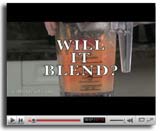 The series has enjoyed several million views as it shows items ranging from iPhones to golf balls being pulverized into particles. Blendtec's videos also have attracted tens of thousands of viewer comments, which, according to my research, have resulted in unprecedented Internet traffic, media placements, contacts, and profitability. The series has enjoyed several million views as it shows items ranging from iPhones to golf balls being pulverized into particles. Blendtec's videos also have attracted tens of thousands of viewer comments, which, according to my research, have resulted in unprecedented Internet traffic, media placements, contacts, and profitability.
The initial video required only $50 to create, yet the subsequent YouTube promotion literally built a brand for Blendtec's home products. The mixture of "humanness" and off-beat humor definitely contributed to its success, and the edgy, low-tech style creates just the kind of proof consumers need to believe that the product will indeed "blend anything."
Case Study #2: CommonCraft's "Paperworks"
As we've just seen, well-designed, "low-tech" videos can be just as engaging, if not more so, than many of the slick productions or otherwise grainy homemade
movies people upload by the thousands to video-sharing sites.
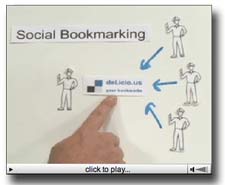 Consider CommonCraft.com, a business that specializes in using a "simple format and real-world stories to make sense of complex ideas." Consider CommonCraft.com, a business that specializes in using a "simple format and real-world stories to make sense of complex ideas."
According to the Web site, the owners design "products and services in plain English using short, unique, and understandable videos" using a model they call "Paperworks."
Follow the link to see a short video on Social Bookmarking, an excellent example of their hallmark style that is largely based on simple paper cutouts, yet highly effective in getting key points across. (Note: This video also has been translated into "plain Ukrainian," as have some others!) Can you do this kind of thing on a small budget? Of course you can! It's the ingenuity behind your script that grabs and sustains your audience's attention.
Case Study #3: Inspiring Social Messages
Movies can evoke powerful emotions, and for that reason, uplifting, inspirational videos can inject riveting elements into a promotional campaign. Depending on the subject matter, you might combine evocative footage with moving music that causes your audience to shift into an altered state of mind and heart.
 By creating a strong, empathic relationship with your audiences, you not only awaken them to whatever "call to action" you might place at the end, but also perpetuate the word-of-mouth advertising for your message. By creating a strong, empathic relationship with your audiences, you not only awaken them to whatever "call to action" you might place at the end, but also perpetuate the word-of-mouth advertising for your message.
I personally have received dozens of links to these kinds of videos, as captivated colleagues or friends enthusiastically forward them to everyone they know.
Two potent examples in this genre are:
- The "Free Hugs Campaign," which has no apparent commercial purpose. But with nearly 24 million views, it's a testimony to how we can ignite a compelling social commentary with low-cost video and an enthralling message.
- "The Jackrabbit Factor," which features inspiring visuals, melodic music, and a thought-provoking story. Its main purpose was to launch a bestselling book and related downloads. After enjoying enormous popularity, this movie was only recently added to YouTube.
- Tip: Many videos in this genre consist primarily of still images, mood music, and text. You can achieve a similar effect inexpensively with PowerPoint slides and transitions, using Camtasia Studio to convert them into Flash productions.
In conclusion, when you harness the power of sharing simple or elaborate video on a high-traffic site such as YouTube, you effectively open your message for worldwide consumption. Your imagination is your only limitation in crafting messages that will engage your audiences in spreading your ideas and following your call to action.
Copyright 2008 Adele Sommers
|





 Rarely have I had so much fun researching a topic as for today's issue! Following the recent theme we've been discussing of ways to boost one's


 Would you like to create a "
 These types of animated characters, known as